The journalist
A man who worked in type
Pal edited newspapers in two languages for four decades. The press was not how he publicised his politics. It was how he conducted them.
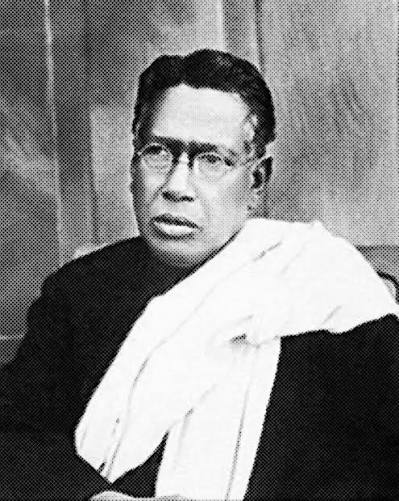
The press desk
Why newspapers mattered
To understand why an editor could be a major political figure in colonial India, begin with what Indians were not allowed to do. They could not vote a government out. They could not staff its senior administration in any numbers. They could not legislate. The Indian Councils reforms of the period admitted a handful of Indians to advisory bodies with no power to compel.
What remained was speech and print. A newspaper was the one instrument through which a colonised population could form and register a collective opinion — and, crucially, through which people who would never meet could discover that they held the same one.
This is the mechanism that turned local grievances into national politics. A protest in Barisal became, through the press, an event that a reader in Madras had a view about. The Partition of Bengal became a national question rather than a Bengali one because it was argued out weekly in print across the subcontinent.
Pal understood this exactly. His career moves between Sylhet, Calcutta, Lahore and London, and between Bengali and English, because he was building and serving different readerships and stitching them into a single argument.
It also explains the colonial state's response. A government that has removed every other channel of political expression must police the one that remains. Prosecutions for sedition, forfeiture of press securities, and after 1908 tightened statutory powers over publication, were not incidental irritations. They were the central mechanism of political control.
Which is why Pal's six months in prison in 1907 is not a footnote to his journalism. It is the natural terminus of it.
The Press — what a nationalist paper carried
A reconstruction of the working departments of the nationalist press of Pal's period. These are section headings describing the kinds of material such papers ran; they are not reproductions of any particular newspaper.
01
Editorial
The leading article: a position and the reasoning behind it. In the nationalist press this was the paper's principal product, not a supplement to the news.
02
Politics
Congress sessions, provincial conferences, official appointments, legislation, deportations and prosecutions — reported with the assumption that the reader was a participant, not a spectator.
03
Economy
Tariffs, imports, indigenous manufacture, the drain of wealth. Pal's own economic writing belongs here: boycott argued as fiscal policy rather than as protest.
04
Nationalism
The theoretical column — what a nation is, what Swaraj would mean, whether India was one nationality or several. This was where the movement argued with itself.
05
Education
The national education movement, new institutions, the curriculum question, and sustained criticism of government schooling.
06
Society
Caste, widow remarriage, religious reform, the condition of plantation labour. Pal's Brahmo formation kept these on the page when others treated them as distractions.
Design reconstruction. No historical newspaper text, headline or front page is reproduced or invented anywhere on this site.
The mastheads
Periodicals Pal edited, founded or wrote for, as recorded in reference works. Where sources disagree on a year, the disagreement is stated.
Paridarshak
c. 1880s
Bengali weekly, published from Sylhet. Pal's first editorial post, in his own district and his own language. Reference works give the year variously as 1880 and 1886.
Bengal Public Opinion
1882
Assistant editor. English-language, Calcutta. His move into the metropolitan press and into political journalism aimed at an educated, cross-provincial readership.
The Tribune
1887
Editor, Lahore. One of the leading English-language papers of northern India. That a Bengali of twenty-nine was appointed to it indicates how quickly his reputation had spread.
New India
1901
English weekly, Calcutta, started by Pal himself. Accounts date the first issue to 12 August 1901. His first fully independent platform, and the vehicle for the political case he would press through the Swadeshi years.
Bande Mataram
1906
English daily, Calcutta. Founded by Pal; first issue 6 August 1906. The central nationalist organ of the Swadeshi period. See below.
Swaraj
1909
Brought out by Pal in London during his years in England. It did not survive the political climate that followed the assassination of Sir Curzon Wyllie in July 1909, and its collapse left Pal in serious financial difficulty.
Later titles
1910s–20s
After his return to India, Pal was associated with further periodicals, among them The Democrat, The Independent and the Hindu Review, and with Bengali-language publication. Dates and durations for these are not consistently recorded across reference works and are therefore not asserted here.
Bande
Mataram
On 6 August 1906 — a year and a day after the great Calcutta Town Hall protest against the Partition of Bengal — the first issue of the English daily Bande Mataram appeared. Pal had launched it with about five hundred rupees.
The editorial history that followed is unusually well documented, because Sri Aurobindo's papers record it. Pal served as editor-in-chief from 6 August to 12 October 1906. Aurobindo joined shortly after the launch and became joint editor on 12 October; from November 1906 he controlled the paper's policy.
Pal left in November 1906. The reason recorded in Aurobindo's editorial papers is a disagreement over direction: those around Aurobindo pressed for a more openly revolutionary programme than Pal was prepared to run. It is an important detail, and one usually omitted from summaries that treat the nationalist camp as a single bloc. Pal founded the most radical newspaper of the period and was then displaced from it for insufficient radicalism.
The paper itself did not long outlive him. Following Aurobindo's arrest on 2 May 1908, it was suppressed under the press legislation of that year.
The event
A daily paper started with Rs 500
Pal launched an English-language daily in Calcutta on 6 August 1906 with almost no capital. Within ten weeks he had a joint editor; within four months he had left; within two years the paper had been suppressed by the government.
The idea
Why founding a newspaper was a political act in itself
Starting a daily meant asserting that Indian opinion existed as a daily fact — that it needed reporting, argument and continuity, not occasional petition. A weekly addresses a public that gathers now and then. A daily assumes a public that is permanently in session. That assumption, more than any single article, was the claim the colonial state found intolerable.
The witness who would not speak
In 1907 the government moved against Bande Mataram under the sedition provisions of the Indian Penal Code. Pal, no longer connected with the paper, was subpoenaed as a witness for the prosecution.
He refused. He stated a conscientious objection to taking any part in the prosecution, on the ground that such prosecutions were unjust and injurious. The court treated the refusal as contempt and, in September 1907, sentenced him to six months' imprisonment. He was released in March 1908, and his release was marked by public demonstrations.
Aurobindo, whose own prosecution this was, wrote about Pal's imprisonment in Bande Mataram on 12 September 1907, in an article titled “The Martyrdom of Bipin Chandra”. He argued that Pal had faced a genuine conflict of duties: a subject population owes obedience to law, but a patriot owes something to society that obedience may violate. He described the sentence as vindictive.
What makes the episode historically substantial is not the sentence, which was short. It is the distinction Pal drew, and Aurobindo defended, between submitting to a law and actively serving it — a distinction that would be worked and reworked in Indian political argument for the next forty years.
Posterity will judge between him and the petty tribunal.
Sri Aurobindo, “The Martyrdom of Bipin Chandra”
Bande Mataram, 12 September 1907
How the state policed the page
What print actually built
The nationalist press did not simply report a movement. In several respects it manufactured one.
It produced simultaneity: readers in different provinces encountering the same question in the same week. It produced vocabulary: words like Swadeshi, boycott and Swaraj acquired agreed political meanings because they were argued about in print until they had them. And it produced accountability — leaders could be quoted back at themselves.
It is also the reason this website can exist. Pal's speeches survive because a Madras publisher printed them in 1907. His arguments survive because he wrote books. A politics conducted primarily in print leaves a documentary record that a politics conducted in meetings and marches does not.
Continue to the Swadeshi movement, where the arguments made in these papers were put into practice — or read the catalogue of his published work.
1880s
First editorship, in Bengali, from Sylhet
1887
Editor of The Tribune, Lahore
6 Aug
1906
First issue of Bande Mataram
Rs 500
The capital he started that daily with
Sources for this chapter
- “Note on the Texts”, Bande Mataram: Political Writings and Speeches 1890–1908 (Sri Aurobindo Ashram) — the 6 August 1906 first issue, Pal's editorship dates, the joint-stock prospectus of 1 October 1906, Pal's departure in November 1906, and the paper's suppression in 1908.
- Sri Aurobindo, “The Martyrdom of Bipin Chandra”, Bande Mataram, 12 September 1907.
- Editorial footnote in Autobiographical Notes and Other Writings of Historical Interest (Sri Aurobindo Ashram): Pal “was sentenced to six months imprisonment for refusing to testify in the Bande Mataram Sedition Case. He was released in March 1908.”
- “Pal, Bipin Chandra”, Banglapedia — Paridarshak, Bengal Public Opinion, The Tribune (Lahore), and the founding of the Bande Mataram daily after the 1905 partition.
- “Bepin Chandra Pal”, South Asian Britain: Connecting Histories — the London journal Swaraj and its closure after the Curzon Wyllie assassination.